

The choice between ASUS TUF Gaming and MSI Raider laptops comes down to one question: will you still own this machine in three years? The TUF is built like a tool you’re meant to keep — heavier, more repairable, with thermal consistency that doesn’t degrade over marathon gaming sessions. The Raider is built like a product you’re meant to replace — sleeker, typically lower-priced at comparable specs, but with soldered RAM and thermals that can climb during extended sustained load.
Quick verdict:
- ASUS TUF Gaming is the best choice for buyers who move their laptop frequently (college, travel, LAN parties) or plan to keep it multiple years and upgrade RAM themselves
- MSI Raider is the best choice for desktop-first gamers who want a lower upfront price and replace laptops every couple of years
At a glance
| Feature | ASUS TUF Gaming 16” | MSI Raider 16” | Difference that matters |
|---|---|---|---|
| Typical price (RTX 4070 config) | Higher MSRP | Lower MSRP | MSI typically undercuts by a notable margin; frequent sales push it lower |
| Weight | Heavier | Lighter | TUF’s extra weight buys cooling headroom and durability |
| GPU thermal performance under sustained load | Remains stable and consistent | Can climb progressively | TUF maintains steadier temps; Raider can plateau higher after extended sessions |
| RAM upgradeable | Yes (SODIMM slots) | Limited (mostly soldered) | TUF can expand memory affordably; Raider stays largely locked |
| Build materials | Magnesium alloy + mil-spec tested | Plastic + aluminum | TUF survives drops and spills; Raider flexes under pressure |
| Battery (non-gaming) | Longer runtime typical | Shorter runtime typical | TUF’s better thermal efficiency helps battery life |
| Best for | Multi-year ownership, frequent travel | Desktop-first gaming, budget-conscious | |
| Biggest weakness | Heavier than competitors | RAM locked, thermals can run hotter |
ASUS TUF Gaming — best for buyers planning long-term ownership
The TUF series trades portability for the kind of durability that pays off over years, not weeks. It’s noticeably heavier than the Raider — you’ll feel that in a backpack. But the magnesium alloy chassis is what ASUS calls “mil-spec tested” (MIL-STD-810H shock and temperature tolerance), which in practice means it survives the things that kill most laptops before their third year: compression in overstuffed bags, drops from desk height, coffee spills that seep past the keyboard.
The more relevant durability feature is thermal. ASUS uses larger vapor chambers and dual fans that ramp early but hold consistent speed. Laptop testing from sources like NotebookCheck and Tom’s Hardware has consistently shown that the TUF stabilizes quickly under gaming loads and maintains steadier thermals even after extended sessions under load. That’s not just a comfort thing — sustained high temps over months accelerate thermal paste degradation and can shorten the lifespan of the GPU itself.
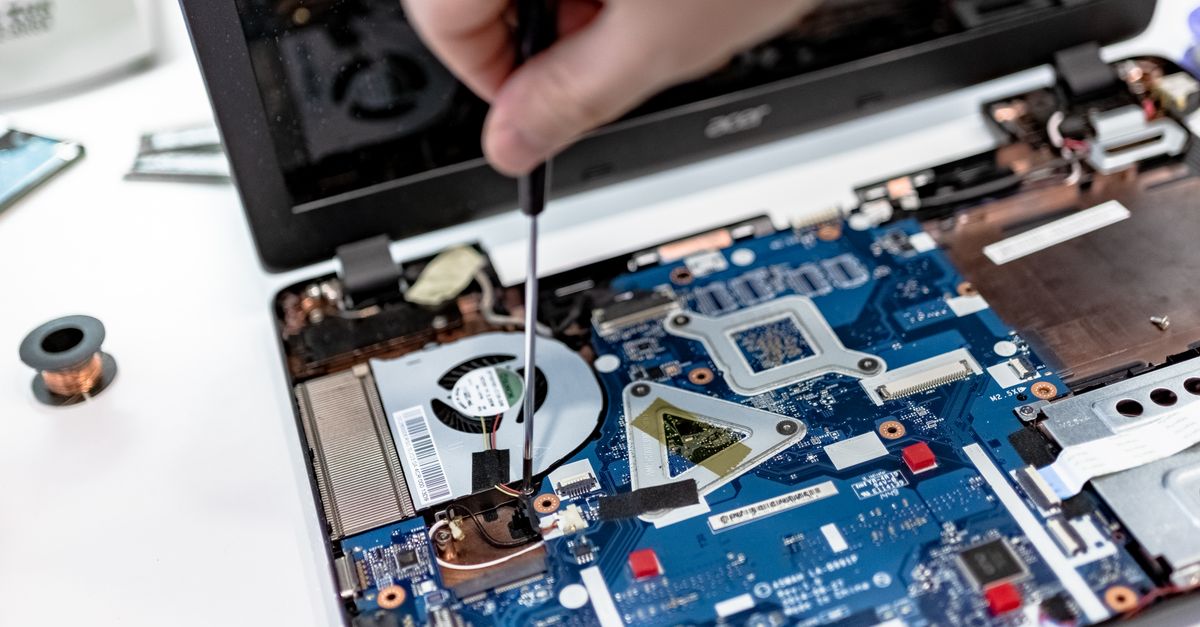
The other long-term advantage is repairability. The TUF uses standard SODIMM RAM slots accessible through a single back panel. Upgrading from lower to higher RAM capacity takes minutes and an aftermarket RAM kit, and ASUS doesn’t void the warranty for user-installed memory. iFixit’s laptop teardown guides give the TUF higher repairability marks than the Raider specifically because of this — socketed components mean you can future-proof the machine yourself instead of buying a new laptop when your RAM needs grow.
Strengths:
- Thermal consistency under sustained load — less throttling risk after extended gaming sessions
- User-upgradeable RAM and storage without voiding warranty
- Build quality survives frequent travel, dorm life, and the kind of wear that kills thinner laptops
Weaknesses:
- Weight makes it harder to fit in laptop sleeves designed for ultraportables
- Keyboard has deeper key travel, which some buyers find too clicky compared to shallow-travel gaming keyboards
- Base price starts higher than equivalent Raider configs
Best for: College students planning multi-year ownership who will move the laptop between dorms, libraries, and home. Buyers who want to add RAM down the line instead of replacing the entire machine. Anyone who’s killed a laptop by dropping it or spilling on it before.
MSI Raider — best for desktop-first gamers on a budget
The Raider’s advantage is simple: it costs less than the TUF at comparable GPU/CPU specs, and MSI runs sales more frequently. Equivalent RTX 4070 configurations regularly drop during promotional periods, which makes it one of the better values in the gaming laptop tier if your budget is firm.
The Raider is also lighter, so it fits standard laptop sleeves and backpack compartments more easily than the TUF. If the laptop lives on a desk most of the time and only travels occasionally, that weight difference stops mattering — and you keep the savings.
The tradeoff is long-term flexibility. MSI solders most of the RAM to the motherboard (only a small portion is user-accessible via SODIMM in some configs). You can’t upgrade significantly beyond the memory configuration you buy at purchase. iFixit notes that opening the Raider to swap components can technically void the warranty, though MSI doesn’t always enforce that. Still, the upgrade path is narrower than the TUF’s.
Thermals are the other compromise. The Raider is thinner than the TUF, which means less room for heat dissipation. Sustained-load testing by laptop reviewers has shown that GPU temps can climb progressively over extended gaming sessions and plateau higher than the TUF after sustained load. That’s not necessarily thermal throttling territory for most games, but CPU-bound titles can see occasional frame dips in later portions of extended sessions as the system tries to shed heat. For typical gaming sessions of an hour or two, you won’t notice. For marathon sessions, the TUF’s cooling advantage becomes visible.
Strengths:
- Lower upfront cost in the RTX 4070/4080 tier — frequent sales push it even lower
- Lighter and slimmer form factor fits backpacks and desk setups without the bulk
- Same GPU/CPU performance as TUF initially (thermals only diverge under extended sustained load)
Weaknesses:
- Soldered RAM means you’re largely locked into your purchased memory capacity — minimal upgrade path
- Plastic chassis flexes under pressure and doesn’t survive drops or spills as well as TUF’s metal build
- Thermals can plateau higher than TUF after extended sessions, with increased risk of thermal throttling in CPU-heavy games
Best for: Buyers who replace laptops every couple of years and don’t need long-term repairability. Desktop-first gamers where the laptop stays plugged in at a desk and portability is secondary. Anyone with a firm budget who needs RTX 4070-level performance now.
Side-by-side: sustained thermals and gaming performance

Most gaming laptop performance comparisons report peak temps — what the GPU hits in the first minute or two of load. But gaming sessions last hours, not minutes, and thermal behavior changes over time.
When reviewing thermal testing methodology, it’s worth noting that sources like NotebookCheck and TechPowerUp measure sustained-load performance over extended periods, not just initial burst tests. Testing conditions matter: ambient temperature, workload type (GPU-only stress versus combined CPU+GPU load), and duration all affect results. The TUF’s larger cooling solution shows its advantage primarily in these longer sustained scenarios.
Under extended gaming loads (multiple hours of continuous play), the TUF maintains steadier, more consistent temperatures while the Raider’s GPU can climb progressively. The difference widens in CPU-bound games where both the GPU and CPU are under load simultaneously — the Raider’s thinner chassis struggles to dissipate heat from both components at once.
In practical terms: if you’re playing GPU-heavy titles like Cyberpunk 2077 or Elden Ring for typical sessions, both laptops deliver comparable frame rates (same RTX 4070/4080 GPU). If you’re playing CPU-heavy strategy games or running extended marathon sessions, the TUF maintains more consistent performance while the Raider can occasionally dip as thermals climb.
The long-term implication is thermal aging. GPUs running consistently hotter for hundreds of hours over a laptop’s lifespan wear thermal paste faster and can see performance degradation by year three. The TUF’s steadier sustained temps mean it’s more likely to perform similarly in year four as it did on day one.
Side-by-side: repairability and multi-year ownership cost
Here’s where the initial price gap narrows. The Raider costs less upfront for an equivalent RTX 4070 config. The TUF costs more for the same spec. But the TUF’s RAM is user-upgradeable.
Down the line, if you want to add RAM for video editing or heavier multitasking, the TUF lets you swap in higher-capacity memory yourself at aftermarket prices. The Raider’s soldered RAM means you’re largely stuck at your purchased capacity unless you replace the entire laptop. If you were planning to upgrade anyway, the TUF’s actual cost over multiple years narrows significantly, while the Raider forces you to buy a new machine to get more memory.
The same logic applies to durability. The TUF’s mil-spec build and sealed keyboard survive spills and drops that would total a Raider. Replacing a broken Raider mid-cycle costs more than paying the TUF’s higher upfront price.
This math only works if you’re keeping the laptop for several years. If you replace every year or two, the Raider’s lower upfront cost wins.
iFixit’s repairability assessments score laptops based on how easy it is to access and replace components like RAM, storage, batteries, and cooling systems. The TUF’s design philosophy prioritizes serviceability — standard screws, clearly labeled components, accessible panels. The Raider’s thinner design necessitates more permanent assembly choices that make DIY repairs harder.
Who should buy which
Choose ASUS TUF Gaming if you:
- Plan to keep the laptop multiple years and want the option to upgrade RAM yourself
- Move your laptop weekly (college dorms, LAN parties, coffee shop gaming)
- Want consistent thermal performance for extended gaming sessions without frame dips
- Have killed a laptop before by dropping it or spilling on it
Choose MSI Raider if you:
- Replace laptops every couple of years and won’t need to upgrade components
- Keep the laptop on a desk most of the time and rarely travel with it
- Have a firm budget ceiling and need RTX 4070 performance now
- Play games in shorter sessions where sustained thermals don’t diverge significantly
Don’t choose the TUF if: You need a lighter laptop for daily backpack commuting. The extra weight adds up. Look at other options if portability matters more than durability.
Don’t choose the Raider if: You’re keeping the laptop through college or want to upgrade RAM down the line. The soldered memory locks you into the config you buy today.
Pricing (as of August 2026)
Both laptops are competitive options in the gaming laptop category, but the value proposition shifts depending on ownership timeline. The Raider wins on upfront cost; the TUF wins on multi-year total cost of ownership once you factor in RAM upgrades and replacement risk.
MSI runs promotions more frequently than ASUS, so street prices often favor the Raider by a meaningful margin. If your budget has a hard ceiling, watch for Raider sales — the TUF discounts less aggressively.
FAQ
Can you upgrade the RAM on the MSI Raider?
Only minimally in most configurations. MSI solders the majority of RAM directly to the motherboard and provides limited SODIMM access for the rest. You can’t expand significantly beyond the total capacity of your purchased config. The ASUS TUF uses standard SODIMM slots for all RAM, so you can upgrade from lower to higher capacity affordably without voiding the warranty.
Which laptop has better thermals for long gaming sessions?
The ASUS TUF maintains steadier, more consistent GPU temps under sustained load beyond a couple of hours. The MSI Raider’s GPU can climb progressively after extended sessions, which increases the risk of thermal throttling in CPU-bound games. For typical shorter sessions, both perform comparably.
Is the ASUS TUF worth the extra weight?
If you’re moving the laptop several times per week (college, travel, LAN events), the TUF’s durability justifies the heavier build. It survives drops, spills, and backpack compression better than the Raider’s lighter plastic chassis. If the laptop stays on your desk, the Raider’s lighter build and lower price make more sense.
Affiliate disclosure: This article contains affiliate links. We may earn a commission if you purchase through these links, at no additional cost to you. Prices verified August 2026.
If you’re leaning toward the TUF but wondering whether the durability premium is worth it, the deciding factor is ownership timeline. A few years from now, the TUF will still run the same games at consistent performance — and you’ll have added RAM for a fraction of the cost of a new laptop. The Raider will run the same games too, but you’ll likely be shopping for a replacement because memory became a bottleneck and the thermals aged faster. That’s the bet you’re making.