

Here’s the thing most comparisons won’t tell you: an Instant Pot and an air fryer aren’t really competitors. They’re fundamentally different appliances that solve different cooking problems. An Instant Pot is a pressure-cooker-first multicooker built for braising, stewing, and batch cooking. An air fryer is a countertop convection oven designed to crisp and brown. If you’re choosing between them, you’re probably asking the wrong question—most kitchens that cook regularly will eventually want both.
The real question is: which one do you buy first?
Quick verdict:
- Instant Pot is the better first buy if you batch-cook meals, make stews or curries, cook dried beans, or need to feed 4+ people from one appliance
- Air Fryer is the better first buy if you prioritize speed, cook frozen foods regularly, live alone or with one other person, or want crispy textures without deep-frying
At a glance
| What it does | Instant Pot | Air Fryer |
|---|---|---|
| Primary function | Pressure cooking (braising, stewing) | Convection crisping (browning, roasting) |
| Can it crisp chicken skin? | No (sealed moisture) | Yes (dry heat) |
| Can it braise short ribs? | Yes (core use case) | No |
| Typical capacity | 6–8 quarts (4–6 servings) | 2–5 quarts (2–4 servings) |
| Speed (frozen chicken to table) | 25–40 min (with pressure buildup) | 15–22 min |
| Learning curve | Moderate (pressure valve, sealing) | Minimal (set temp and timer) |
| Counter footprint | ~10” diameter, 5.5” tall | Varies: 12–16” wide, 5–8” tall |
| Entry price (Aug 2026) | $60–$100 | $50–$120 |
| Best for | Meal preppers, batch cookers, bean cooks | Speed cooks, frozen-food households, small servings |
| Biggest weakness | Can’t brown or crisp | Small batch size, can’t braise or stew |
Why this isn’t actually a versus match
I learned this the hard way during my second kitchen renovation. I’d bought an air fryer first because the internet promised it would “replace my oven.” It didn’t. It made frozen fries crispy and reheated pizza better than a microwave, but when I tried to make chicken thighs and rice for meal prep, I was stuck cooking in batches—air fryer for the chicken, stovetop for the rice, two separate timers.
Six months later I added an Instant Pot, and suddenly I could braise a whole pot of chicken thighs with the rice in 25 minutes, hands-off. The air fryer couldn’t do that. But the Instant Pot also couldn’t give me the golden-brown, crispy skin the air fryer delivered in 18 minutes.
They weren’t solving the same problem. The Instant Pot is a multicooker with pressure cooking as its superpower—it excels at turning tough cuts tender, cooking dried beans without soaking, and making stews in a third of the time a slow cooker needs. The air fryer is a compact convection oven that circulates hot air to brown and crisp food without deep-frying. One creates moist, braised textures in a sealed environment. The other creates dry, crispy textures with high airflow.
According to testing from America’s Test Kitchen, pressure-cooked meats develop fall-apart tenderness but won’t develop the Maillard browning you get from dry heat. Conversely, air fryers excel at crisping exteriors but can’t replicate the moist, slow-cooked texture of braised dishes. These aren’t trade-offs—they’re entirely different outcomes.
So when someone asks which countertop appliance to buy, I ask back: what meal prep problem are you actually trying to solve?
Instant Pot — best for batch cooking and braised meals
The Instant Pot’s core strength is pressure cooking: it traps steam in a sealed pot, which raises the boiling point of water and cooks food faster than conventional methods while keeping it moist. That makes it ideal for recipes where you want tenderness, depth of flavor, and minimal active cooking time.
A 6-quart Instant Pot (the most common size) can cook a whole pot of chili, curry, or stew that feeds 4–6 people. Dried beans go from pantry to tender in 30 minutes without pre-soaking. Tough cuts like short ribs or pork shoulder that normally take 3–4 hours in the oven are done in under an hour. The sealed environment means almost no evaporation, so you don’t need to babysit liquid levels.
What it does well:
- Pressure cooking (the main event): dried beans, tough cuts, stews, curries, risotto
- Slow cooking (built-in mode, though a dedicated slow cooker does this slightly better)
- Steaming vegetables and dumplings (with the included rack)
- Rice cooking (though a dedicated rice cooker is faster for daily use)
- Yogurt making (some models include a low-temp fermentation mode)
What it doesn’t do:
- Brown or crisp food (the sealed, moist environment is the opposite of what you need for a crispy skin)
- Cook small single servings efficiently (minimum liquid requirements mean you’re better off using a pot on the stove for one portion)
- Work intuitively the first few times (you need to learn pressure release methods, sealing checks, and timing adjustments)
Biggest weakness: The silicone sealing ring absorbs and retains odors. After a batch of garlic-heavy curry, your Instant Pot will smell like garlic for weeks unless you soak the ring in baking soda or buy a second ring to swap out. This is a known issue across all pressure cookers, not just Instant Pot—Consumer Reports notes it in nearly every multicooker review.
Best for: Households that meal-prep in bulk, cook dried beans or grains regularly, make stews and braises, or need to stretch a grocery budget by cooking cheaper cuts of meat. Also ideal if you have limited stove access (dorm, small apartment kitchen) and need one appliance that can handle multiple cooking methods.
The typical entry-level 6-quart Instant Pot Duo runs $60–$80 on sale, $90–$100 at regular retail. That’s about the same price as a mid-range air fryer, but the Instant Pot gives you more cooking methods in one device.
Air fryer — best for speed and crispy textures
An air fryer is essentially a small, powerful convection oven with a basket. A fan circulates hot air (usually 350°F–400°F) around food, which browns and crisps the exterior much faster than a conventional oven. There’s no oil required (though a light spray helps), and you don’t need to preheat most models.
The real appeal is speed. Frozen chicken wings go from freezer to crispy in 18 minutes. Leftover fried chicken reheats in 6 minutes and tastes better than it did fresh. Roasted Brussels sprouts with caramelized edges are done in 12 minutes. If you’re cooking for 1–2 people and want dinner fast, the air fryer wins.
What it does well:
- Crisping and browning: frozen fries, chicken thighs, wings, breaded fish, roasted vegetables
- Reheating fried or baked foods (better than a microwave, faster than an oven)
- Small-batch roasting (vegetables, tofu, salmon)
- Cooking from frozen without defrosting
What it doesn’t do:
- Braise, stew, or slow-cook (no liquid cooking; it’s a dry-heat appliance)
- Handle large quantities (most consumer models max out at 3–4 servings per batch)
- Cook rice, beans, or grains (you need a separate appliance)
- Replace a full-size oven for baking (temperature control and capacity are limited)
Biggest weakness: Batch size. A typical 4-quart air fryer can handle 2–3 servings at a time. If you’re cooking for a family of four, you’ll run two batches—and the first batch gets cold while the second one cooks. According to Wirecutter’s air fryer testing, even the larger 6-quart models struggle with more than 4 servings of chicken thighs without overcrowding (which kills the crisp).
Best for: Small households (1–2 people), anyone who relies on frozen convenience foods, speed-focused cooks who want dinner in under 20 minutes, or people who want crispy textures without the mess of deep-frying. Also great as a second appliance to supplement an oven or Instant Pot.
Pricing varies wildly by capacity. Compact 2–3 quart models start at $50–$70. Mid-range 4–5 quart air fryers (the sweet spot for most buyers) run $90–$150. High-end countertop oven-style models with 8+ quart capacity can hit $200–$400, but at that point you’re comparing them to toaster ovens, not countertop fryers.
Side-by-side: Texture and cooking results

This is where the category difference becomes obvious.
If you want fall-apart tender short ribs, risotto with a creamy texture, or dried chickpeas cooked to soft perfection, the Instant Pot delivers textures an air fryer simply cannot produce. Pressure cooking breaks down collagen in tough cuts and gelatinizes starches in ways that require steam, pressure, and time. This creates braised meats that retain more moisture and develop richer flavor than the same cuts roasted in dry heat—a textural difference that’s fundamental to why these appliances aren’t interchangeable.
If you want golden-brown chicken skin, crispy-edged roasted potatoes, or reheated fried food that isn’t soggy, the air fryer is the only tool that works. The Instant Pot’s sealed, moist environment is the exact opposite of what creates a Maillard reaction—the chemical process that browns proteins and sugars to create crispy, flavorful crusts.
I’ve tried both on the same recipe to test this. Chicken thighs in the Instant Pot: tender, juicy, flavorful—but the skin is soft and pale. Chicken thighs in the air fryer: crispy skin, caramelized edges, but the interior can dry out if you overcook by even 3 minutes. Neither is “better.” They’re producing fundamentally different results.
Side-by-side: Counter space and storage
Here’s a surprise: a 6-quart Instant Pot is often smaller than a mid-range air fryer.
The Instant Pot’s footprint is roughly 10 inches in diameter and 5.5 inches tall—about the size of a large stockpot. It sits flat and stable, and you can store it in a cabinet if you’re not using it daily.
Air fryers vary wildly. Compact bucket-style models (2–3 quarts) are about 8 inches wide and 10 inches tall—small enough for a dorm countertop. But the popular 5–6 quart basket models are often 12–16 inches wide, 10–12 inches deep, and 8–10 inches tall. Countertop oven-style air fryers take up as much space as a microwave.
During my first renovation, I assumed the air fryer would be the space-saver. It wasn’t. My 5-quart Instant Pot tucked into a lower cabinet when not in use. The air fryer lived on the counter because it was too awkward to move.
If counter space is your main constraint, measure your actual available footprint before assuming one is smaller. And check the outlet situation—both appliances need a dedicated outlet and shouldn’t share a power strip with other high-draw devices.
Who should buy the Instant Pot first
You’re a better fit for the Instant Pot as your first countertop appliance if:
- You batch-cook meals for the week. The 6-quart capacity is ideal for making a large pot of chili, curry, or stew on Sunday that feeds you through Thursday.
- You cook dried beans or grains regularly. Pressure cooking turns dried beans tender in 30 minutes without soaking. That’s a game-changer if you’re trying to cut grocery costs.
- You make stews, braises, or slow-cooked meals. Instant Pot does in 45 minutes what a slow cooker does in 6 hours.
- You’re feeding 3+ people per meal. The larger capacity handles family-size portions in one go.
- You have a limited kitchen budget and want one multi-function tool. Instant Pot replaces a pressure cooker, slow cooker, rice cooker, and steamer. That’s 4 appliances for the counter space of one.
- You’re willing to invest 3–5 cooking sessions learning the appliance. The learning curve is real but short—once you understand pressure release and sealing, it’s hands-off.
The Instant Pot also suits long-term-value thinkers. I bought my 6-quart Duo in 2021 for $79 and have used it 2–3 times a week for five years. The silicone ring costs $8 to replace annually, but otherwise it’s been maintenance-free. That’s hundreds of meals for under $120 total cost.
Who should buy the air fryer first
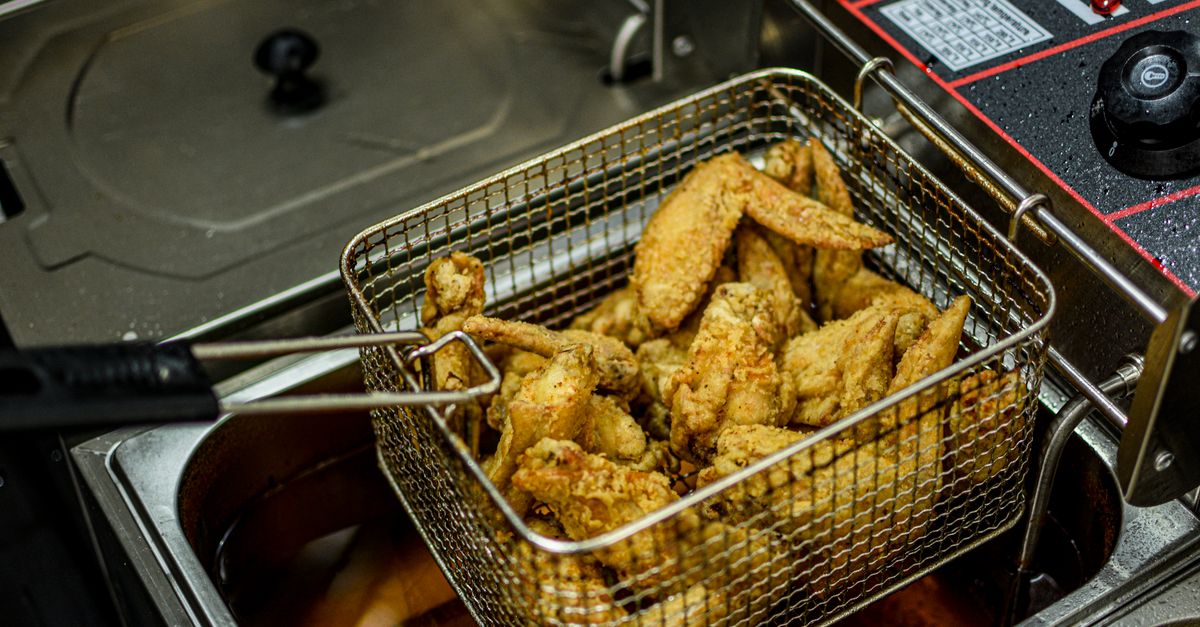
You’re a better fit for the air fryer as your first countertop appliance if:
- You cook for 1–2 people most nights. The smaller batch size isn’t a drawback; it’s right-sized for small households.
- You rely on frozen foods. Frozen chicken nuggets, fries, fish sticks, and wings all cook faster and crispier in an air fryer than in a conventional oven.
- You want speed over variety. If “dinner in 20 minutes or less” is your top priority, the air fryer delivers.
- You hate soggy reheated leftovers. Air fryers reheat pizza, fried chicken, and roasted vegetables better than a microwave or oven.
- You want a low-commitment learning curve. Set the temp, set the timer, pull the basket. There’s no manual to read.
- You prioritize crispy textures. If golden-brown, crunchy exteriors make or break a meal for you, the air fryer is non-negotiable.
Air fryers also suit renters and small-space dwellers. A compact $60 model fits on a narrow counter or dorm shelf, doesn’t require understanding pressure valves, and you can hand it off or donate it when you move without much financial loss.
Deal-breakers: What disqualifies each option
Instant Pot deal-breakers
- You want crispy, browned food. If chicken skin must be golden and crackling, the Instant Pot can’t deliver. The sealed moisture is fundamentally incompatible with crisping.
- You’re intimidated by pressure cooking. Some people never trust the seal and under-use the appliance. If that’s you, don’t force it.
- You cook for one person most nights. The 3-cup minimum liquid requirement and large capacity make single servings inefficient.
- You’re sensitive to lingering food smells. The silicone gasket odor retention is a real annoyance for some households.
Air fryer deal-breakers
- You meal-prep for 4+ people. The small batch size means cooking in shifts. That’s frustrating when you’re trying to prep Sunday meals.
- You want to make stews, braises, or cook dried beans. Air fryers can’t do liquid-based cooking. You’ll need another appliance.
- You have zero counter space. Even compact models need a permanent spot or easy pull-out access. If your counter is maxed, reconsider.
- You expect it to replace your oven. It won’t. It’s a supplement, not a replacement.
Pricing snapshot (August 2026)
Instant Pot:
- 6-Quart Duo (entry model): $60–$80 on sale, $90–$100 regular retail
- 6-Quart Duo Plus (WiFi, extra modes): $100–$140
- 8-Quart Duo (large batch): $90–$120
Air Fryer:
- Compact 2–3 quart (Dreo, COSORI): $50–$80
- Mid-range 4–5 quart (Instant Vortex, Ninja): $90–$150
- Countertop oven style 6–8 quart: $180–$400
Prices verified August 29, 2026. Both categories see seasonal sales around Black Friday, Prime Day, and back-to-school. If you’re budget-flexible, waiting for a sale can save $20–$40.
Can you justify owning both?
Yes—and many households eventually do. They’re not redundant.
I bought the air fryer first (2020, mid-pandemic frozen-food phase). Added the Instant Pot in 2021 when I got serious about meal prep. Now I use the Instant Pot for Sunday batch cooking (chili, curry, shredded chicken for tacos) and the air fryer for weeknight speed meals (frozen salmon, roasted vegetables, reheating leftovers). They don’t compete for the same cooking slots.
If you’re trying to decide which one to buy first, ask yourself: am I solving for speed and crispy textures (air fryer), or am I solving for batch cooking and braised meals (Instant Pot)? Your honest answer to that question is your buying decision.
And if you’re still not sure, buy the Instant Pot first. It’s the more versatile multicooker, and you can always add an air fryer later when it goes on sale for $60. The reverse is harder—an air fryer can’t grow into the Instant Pot’s capabilities, but an Instant Pot can anchor your kitchen while you figure out if you need the air fryer’s specific skill set.
FAQ
Can an Instant Pot air fry, or can an air fryer pressure cook?
Some newer Instant Pot models (like the Duo Crisp) include an air fryer lid attachment, and some air fryer brands (like Ninja Foodi) include pressure-cooking capability. These hybrid models exist, but they’re typically $180–$300—more expensive than buying both appliances separately. Unless you’re absolutely certain you need both functions and have limited counter space, buying the hybrid often means paying for convenience you may not use.
Which one uses less electricity?
Air fryers typically use 1200–1500 watts and run for 12–20 minutes per session. Instant Pots use 1000–1200 watts but run for 20–40 minutes including pressure buildup. Over a month of regular use, the electricity cost difference is negligible—usually under $2–$3. Neither is an energy hog.
Do I need to buy extra accessories?
For the Instant Pot: The included rack and inner pot are sufficient for most cooking. Some users buy a second silicone sealing ring ($8–$12) to keep savory and sweet smells separate, or a glass lid ($15–$20) for slow-cooking mode.
For the air fryer: The included basket works for most tasks. Parchment liners ($8 for 100) make cleanup easier, and a multi-layer rack ($12–$18) helps if you’re cooking small items like wings in batches. Neither is essential.
How long do they last?
Both are durable if maintained. I’m five years into my Instant Pot with zero mechanical issues (just annual gasket replacement). Air fryers typically last 3–5 years; the heating element and fan motor are the weak points. For long-term value, the Instant Pot edges ahead, but both should give you years of service.
Affiliate disclosure: This article contains affiliate links. If you purchase through these links, Comparisony earns a commission at no extra cost to you.
If you’re leaning toward the Instant Pot and want to explore other multicooker options, see comparison articles on hybrid models. Or if you’ve decided on an air fryer and want to compare specific brands, look for roundups that break down the top models by capacity and price tier.